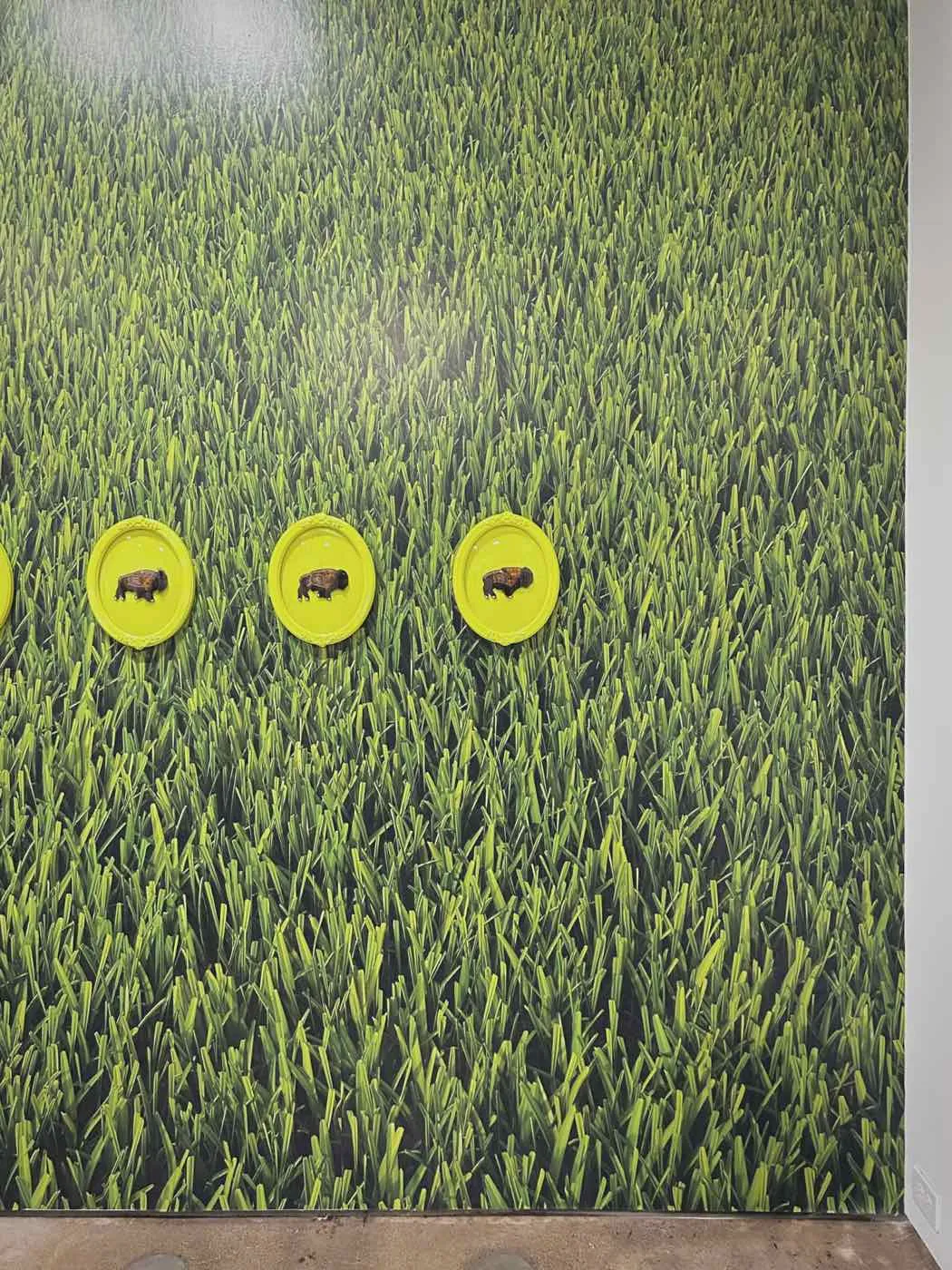
In the main room at daphne, a whole wall of grass. On it, beaded bison, each in its own canola-yellow oval. This is Ionkwá:re aiakwaten’nikón:raren / Prenons soin / we tend to care, Carrie Allison’s exhibition, curated by Franchesca Hebert-Spence.
Carrie Allison is a nêhiyaw and Métis artist. She lives in K’jipuktuk, Mi’kma’ki (Halifax), and her maternal roots are around High Prairie, Alberta. Her gesture is the bead.
A lawn, bead by bead
She looks at what we no longer see: the lawn. Mowing it, maintaining it, keeping it “proper” because the law and the neighbours demand it. A mundane gesture, and yet it tells of property, of labour, and of land that was taken.
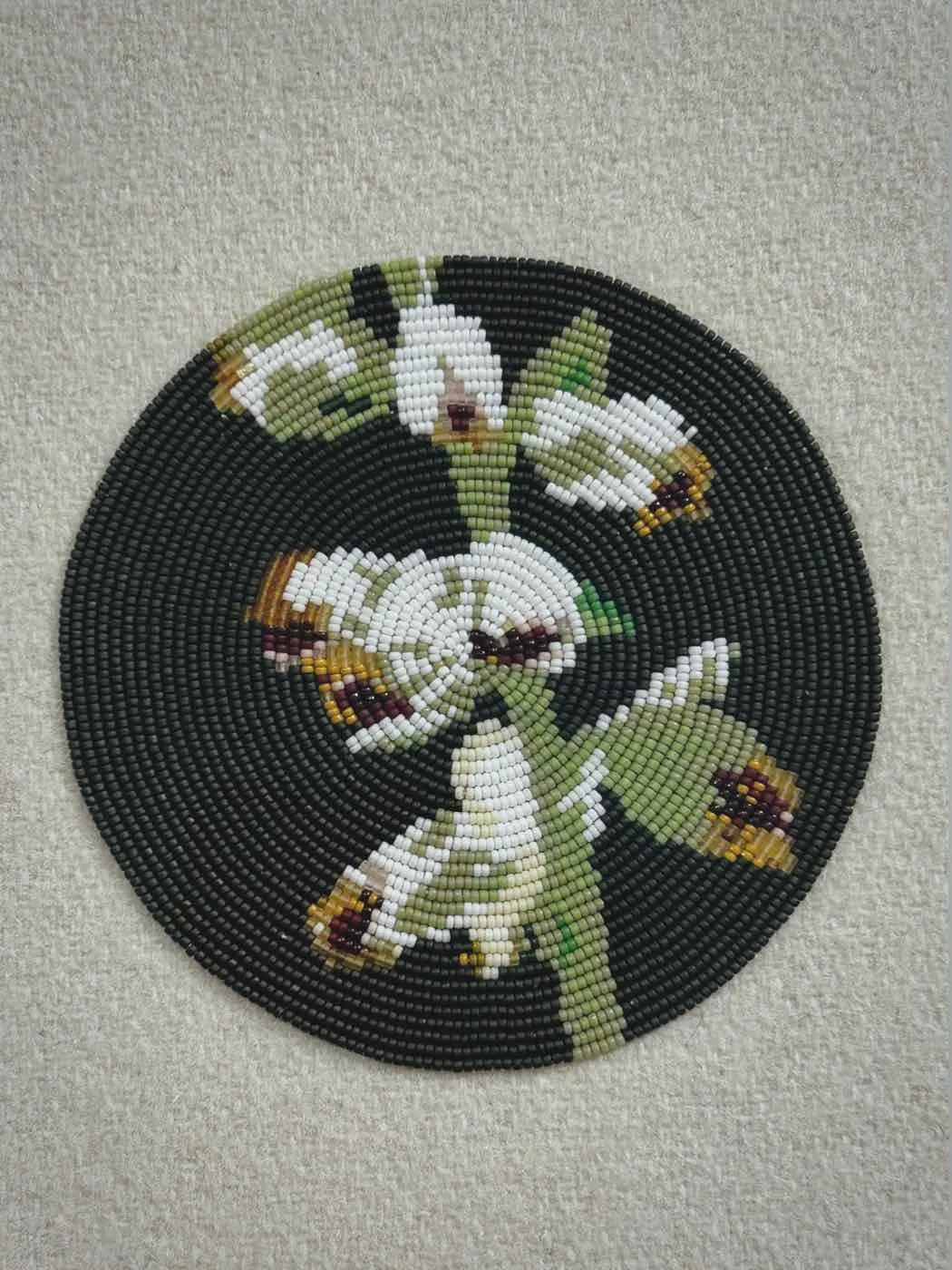
She answers with the slowest gesture there is. Portraits of Grass holds, blade by blade, the clover pulled from her yard. First Family, beaded in growing circles, honours the medicinal plants of her matrilineal territory.
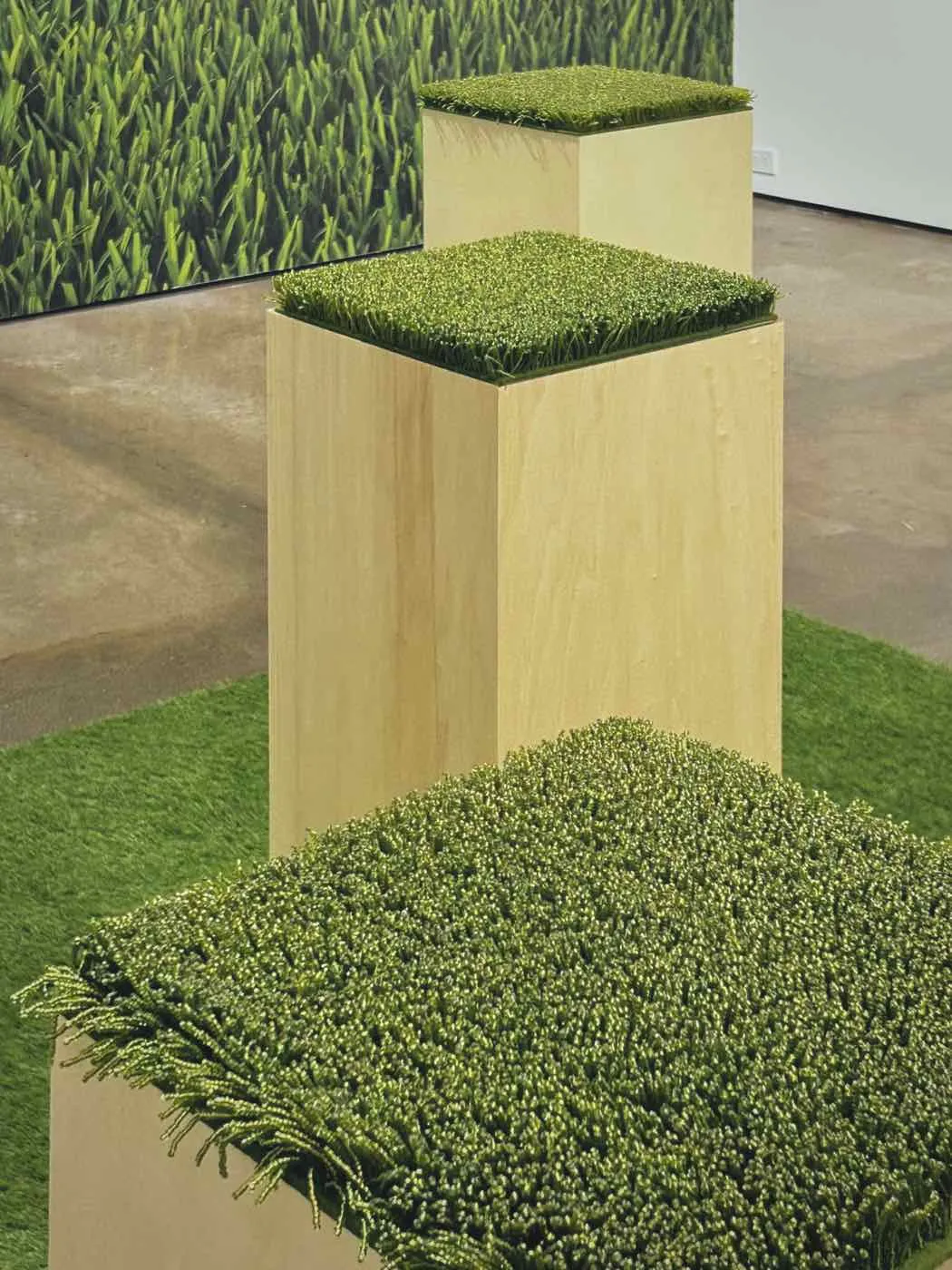
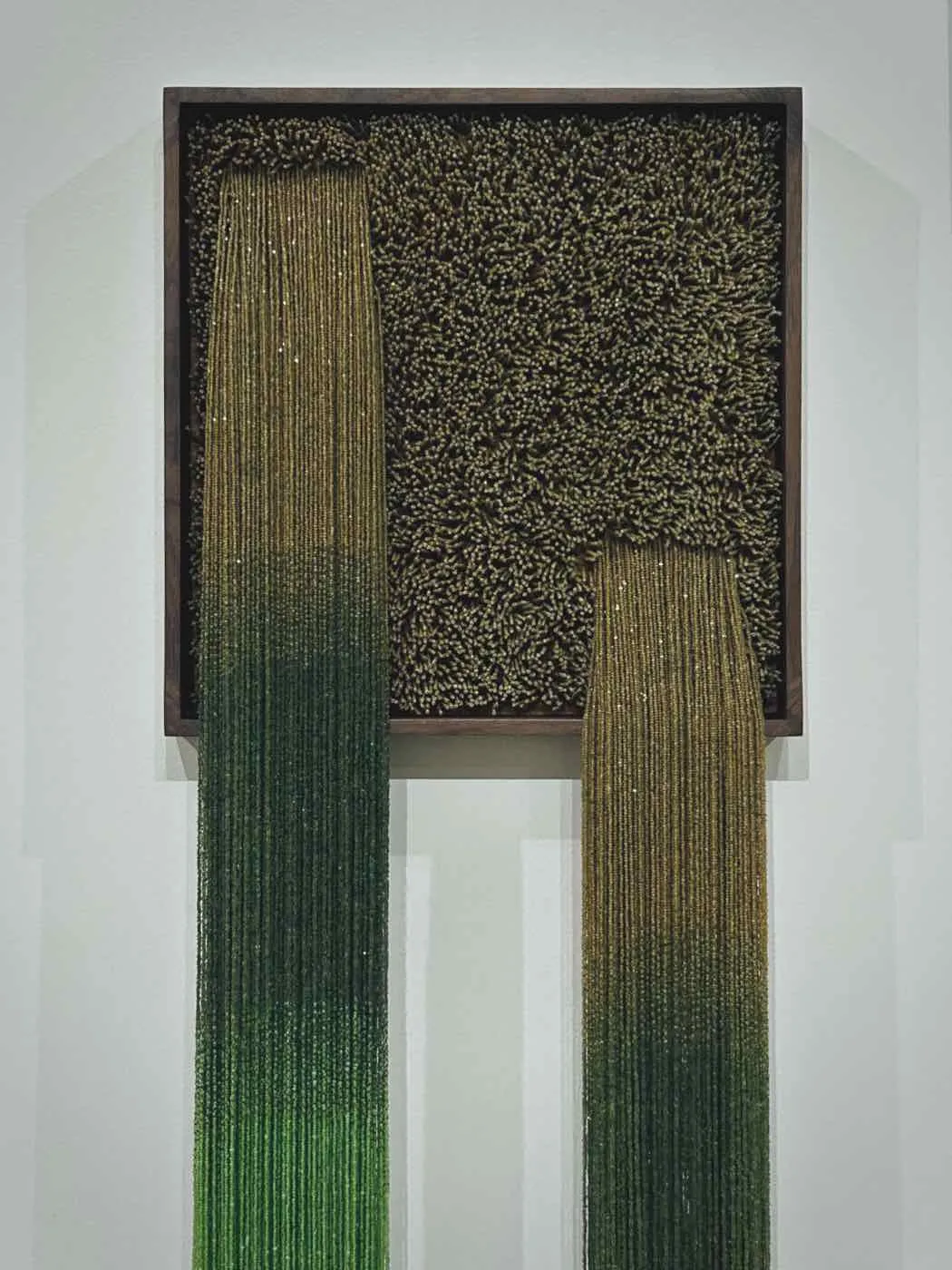
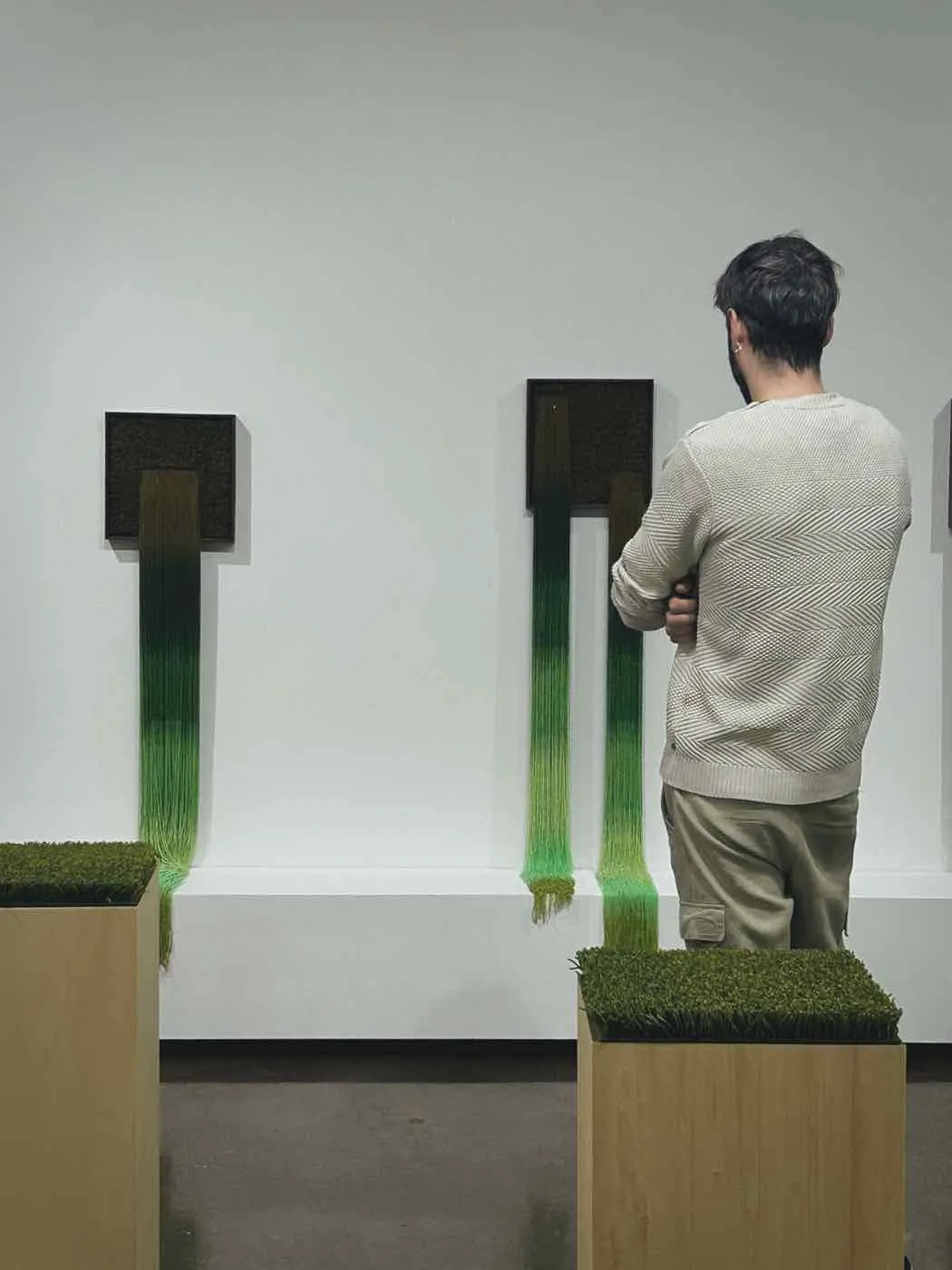
they built fields of grass on sawdust: poplar sets squares of beaded turf on poplar plinths, lined up like the survey lots that still cut through Canada. Nuclear Turf lets the grass mutate and spill to the floor, from dry green to acid green.
The bison come from Eadweard Muybridge’s chronophotograph Buffalo Running (1883).
Info
Until 18 December 2026, at daphne, 5425 avenue Casgrain, unit 103, Tiohtià:ke/Montréal. Monday to Saturday, 12 to 5 pm.
Carrie Allison is also showing at the McCord Stewart Museum: askōhtēskanohwē, until 28 February 2027, as part of the Biennale d’art contemporain autochtone.
Thank you to Carrie Allison, to Franchesca Hebert-Spence, and to Lori Beavis and the daphne team.